
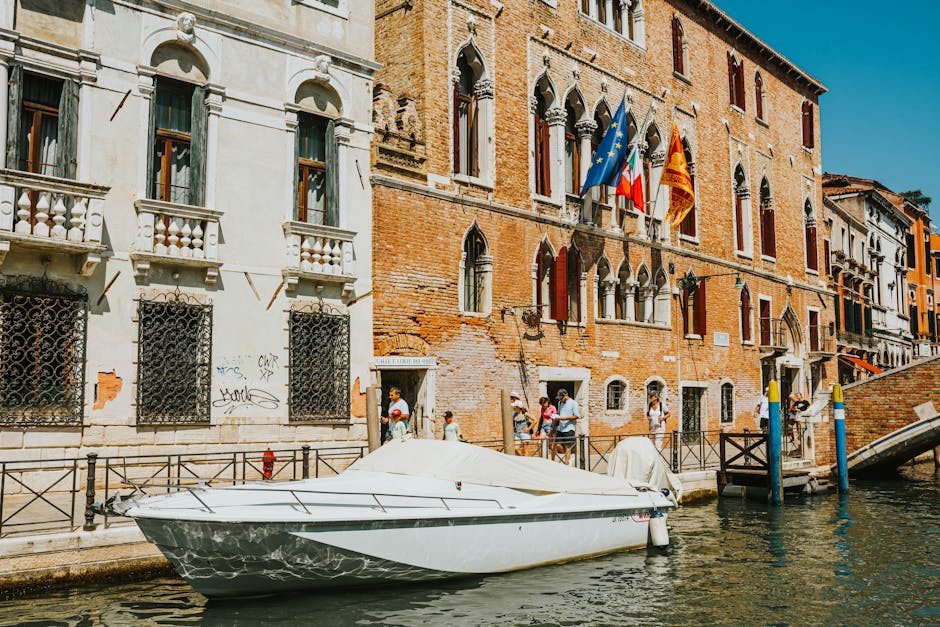
The hotel you pick in Venice matters less than which sestiere (neighborhood) it sits in. A €200-per-night room in San Marco puts you in a tourist fishbowl where restaurants charge €8 for a coffee. The same budget in Dorsoduro or Cannaregio gets you a quieter calle, better trattorias, and a version of Venice that feels like it belongs to the people who live there.
This guide cuts through inflated reviews and overbooked palazzi to deliver real picks across every budget tier — plus the mistakes that make first-time visitors regret their booking before they’ve unpacked.
Venice Neighborhoods Compared: Where You Should Actually Stay
This is the decision that shapes everything else. Venice is divided into six main sestieri plus surrounding islands. Each has a different character, price point, and walking relationship to the major sights. Get this wrong and no hotel quality fixes it.
| Neighborhood | Vibe | Avg. Nightly Rate | Best For |
|---|---|---|---|
| San Marco | Tourist-heavy, central | €200–€600+ | First-timers who want zero logistics |
| Dorsoduro | Artistic, quieter | €130–€350 | Couples, art lovers, repeat visitors |
| Cannaregio | Local, authentic | €100–€280 | Budget travelers, longer stays |
| San Polo | Lively, near Rialto | €120–€300 | Foodies, market-goers |
| Castello | Residential, eastern Venice | €110–€250 | Walkers, off-season travelers |
| Giudecca | Island, peaceful | €150–€500+ | Luxury retreats, pool seekers |
| Lido | Beach island, spacious | €100–€400 | Families, summer visits |
Why Dorsoduro Beats San Marco for Most Travelers
Dorsoduro holds the Gallerie dell’Accademia, the Peggy Guggenheim Collection, and Campo Santa Margherita — the most genuinely lively square in Venice, where locals actually eat and drink rather than pose for photographs. It’s a 10-minute walk from the heart of San Marco. Hotels here cost 20–40% less than equivalent properties across the Grand Canal. For most travelers staying more than one night, Dorsoduro is the right call, and the choice is not close.
The Case Against San Marco — and When It Still Makes Sense
San Marco works if you’re arriving late, staying one night, or have mobility issues and need to minimize bridge-crossing. Hotel Monaco & Grand Canal, sitting directly on the water with Grand Canal views from the terrace, earns its premium in that specific context. But for any stay over 48 hours, the constant tourist density becomes genuinely exhausting. Streets around Piazza San Marco are packed from 8am to 10pm, year-round, without exception.
The Best Luxury Hotels in Venice
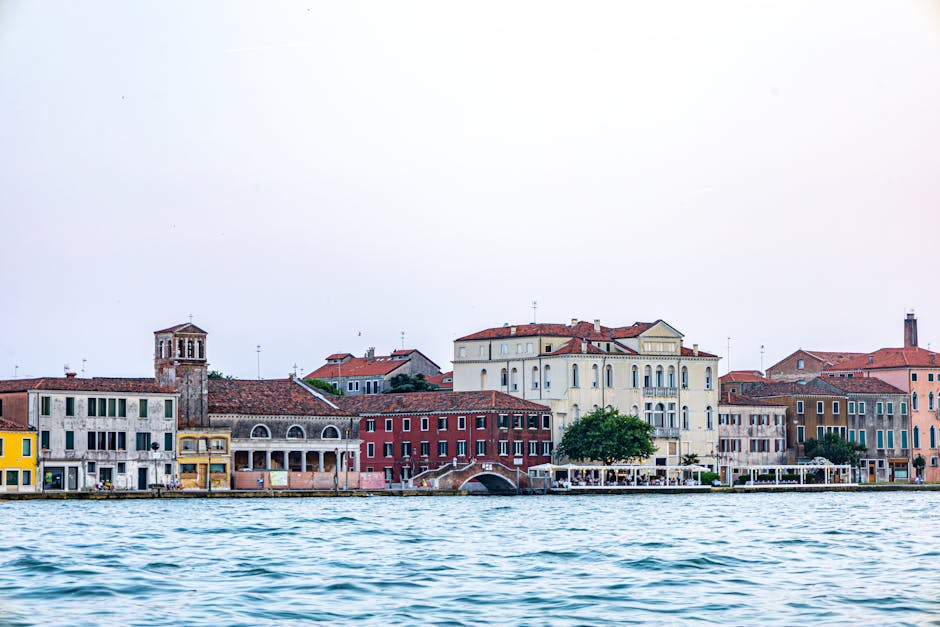
Venice has genuine world-class luxury — not the manufactured kind found in generic five-star chains. Three properties consistently separate themselves from the rest.
The Gritti Palace (Campo Santa Maria del Giglio, San Marco) is a 16th-century palazzo managed under Marriott’s Autograph Collection — though you’d barely know it. Rooms start around €800 per night in peak season. The Canal Suite, with its private terrace facing the Grand Canal, is one of the most photographed hotel rooms in Europe for a reason. Ernest Hemingway drank at the bar, and they’ve been making the same Negroni since. The actual selling point at this price is the butler service: luggage arrives in your room before you do, restaurant reservations appear without prompting, and private boat transfers are handled from pickup to door.
Aman Venice occupies the Ca’ Papadopoli, a 16th-century palazzo on the Grand Canal with only 24 rooms. At €1,500–€3,000 per night, it isn’t a recommendation for most travelers. But it’s the only luxury property in Venice where you genuinely feel like you’re staying in a private home rather than a converted institution. No lobby crowds. No tour groups in the corridors at 9am. The frescoed ballroom is extraordinary — even worth seeing if you’re just passing through and not a guest.
Belmond Hotel Cipriani sits on Giudecca island, reached by the hotel’s private boat taxi in under 10 minutes. This separation is the entire point. The property has 96 rooms, the only Olympic-length swimming pool in historical Venice, and the Cip’s Club restaurant on a waterfront terrace that ranks among the best meals you can have in Italy — not just Venice. Peak season rates run €1,200–€2,500 per night. The Cipriani also has a genuine argument for families who need space that central Venice simply cannot provide.
What to Actually Expect at This Price
Private boat transfers, Grand Canal or lagoon views, 24-hour butler service, and on-site fine dining — yes. Large rooms — not guaranteed. Venetian palazzi were not designed for modern hotel room sizing. Even at €1,500 per night, rooms can be atmospheric but compact. Always ask for square footage before confirming a booking, and specify the wing when staying at multi-building properties.
Hotel Danieli — The Famous Name That Divides Opinions
Hotel Danieli (Marriott Luxury Collection, Riva degli Schiavoni) is the most recognizable hotel name in Venice, occupying a 14th-century Doge’s palace. The original Palazzo Dandolo wing has stunning Gothic interiors. The 1940s extension wing is mediocre by comparison and costs the same. If you book Danieli, specifically request the Palazzo Dandolo wing. If that’s not available, The Gritti Palace delivers a more consistent luxury experience at a similar price.
Mid-Range Hotels That Actually Nail Venice’s Atmosphere
The €120–€300 tier is where Venice becomes genuinely interesting — and unpredictable. Some properties here outshine places costing twice as much. Others coast entirely on their postcode.
Ca’ Sagredo Hotel in Cannaregio sits directly on the Grand Canal and has original frescoes by Giambattista Tiepolo on its staircase ceiling. It’s classified as a historic residence rather than a full-service hotel, which holds rates at €180–€350 per night while the interiors compete with properties at double the price. Breakfast is included and genuinely good — not the shrink-wrapped continental afterthought common at this tier.
Hotel Al Ponte Mocenigo in Santa Croce runs €130–€200 per night and has 16 rooms arranged around a small internal courtyard, which is a genuine rarity in Venice’s cramped urban fabric. The staff consistently receive high marks for giving actual local advice: which bacaro serves the best cicchetti, which vaporetto line to avoid at rush hour. It books out months in advance during high season, so plan accordingly.
Palazzo Veneziano in Dorsoduro offers doubles from €120–€200. The décor leans theatrical — carnival masks, heavy drapes, rich fabrics — but the beds are comfortable, breakfast is generous, and its position near Campo San Barnaba puts you next to better food options than anything you’ll find near Piazza San Marco.
Is the “Canal View” Premium Worth Paying?
Hotels charge 20–40% more for Grand Canal views. The view is genuinely beautiful in the morning light. It also comes with vaporetto engine noise starting at 5:30am and continuous boat traffic through the day. Light sleepers consistently report this as their single biggest regret. A garden-facing or courtyard-facing room in a quieter property often delivers better sleep and a comparable character. Earplugs don’t meaningfully solve the vaporetto problem.
What Mid-Range Venice Hotels Rarely Offer
Rooftop terraces are rare due to preservation restrictions on the built fabric. Pools are nearly nonexistent outside Giudecca and the Lido. Gym facilities are basic where they exist at all. If any of these are non-negotiable, the mid-range tier won’t deliver them — budget up to the Belmond Cipriani or shift the base to the Lido.
The Acqua Alta Problem Most Visitors Ignore
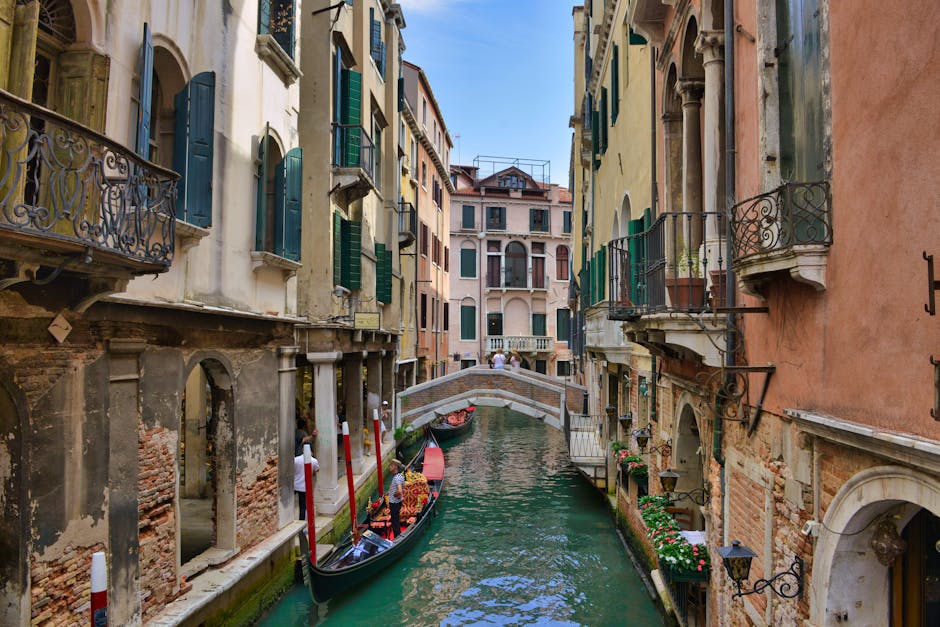
From October through April, Venice floods. Water levels during severe events reach 80–150cm, and hotels near Piazza San Marco and the Rialto sit at the lowest elevations in the city — they flood first and hardest. If you’re visiting in winter, book in Dorsoduro or Cannaregio, which sit marginally higher. Ask your hotel directly about their acqua alta response protocol before arrival. The €15 rubber boots sold at every pharmacy are not a tourist novelty — during a genuine flood event, they’re the only way to reach your front door.
Budget Options in Venice That Are Actually Livable
Is it possible to find a decent hotel under €100 in Venice?
Yes — in Cannaregio, Castello, or during deep shoulder season (November, early December, and mid-January through February). Generator Venice is the standout budget option: a design-forward hostel and hotel hybrid in a converted granary on Giudecca island, with private rooms from €80–€120 per night and a rooftop terrace with direct lagoon views. The communal areas are genuinely appealing rather than just functional. It’s the best value property in the city at this price point, and it outperforms plenty of mid-range options on atmosphere.
Should you stay in Mestre to save money?
Mestre is the mainland city connected to Venice by a 15-minute train. Hotels run €60–€100 per night. The tradeoff is real and significant: you’re not in Venice at night. You miss the evening light on the canals, the quiet that settles after 9pm when day-trippers leave, and the specific experience of waking up on an island. For a one-night transit stop, Mestre is defensible. For any trip built around experiencing Venice, staying there is a false economy dressed up as budget travel.
Best budget pick on the main island
Hotel Antiche Figure near Piazzale Roma offers doubles from €90–€150 and holds the most practical location for budget travelers — a four-minute walk from the train and bus terminals where most budget arrivals land. Rooms are small and breakfast costs extra, but the location eliminates the luggage-over-bridges ordeal on arrival day, which is worth more than it sounds after a long flight.
When a Venice Hotel Is the Wrong Choice Entirely
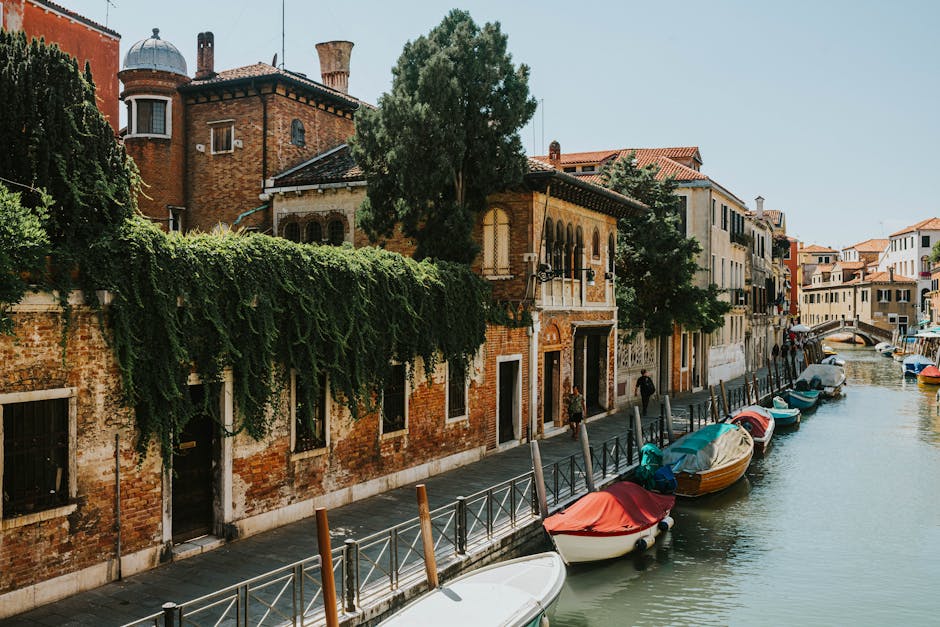
For families with young children visiting in July or August, a traditional palazzo hotel in central Venice is the wrong base. Full stop.
Venice in peak summer attracts roughly 70,000 visitors per day on an island that houses around 50,000 residents. Central hotels have no outdoor space, no pools, and no room to breathe. Streets stay packed from dawn well into the evening. Children’s tolerance for this environment drops sharply after day two — and there’s nowhere to decompress.
Villa Mabapa on the Lido island solves this directly: it has a real garden, actual space, and a 12-minute vaporetto ride to the main island whenever you want the full Venice experience. The Lido is where Venetians spend their own summers. Hotel Excelsior Venice Lido Resort (Marriott Autograph Collection) is the landmark luxury option on the island — a Moorish-Byzantine building with direct beach access that was the crown jewel of 1930s European tourism, with peak season rates from €300–€600 per night. Less dramatic than a Grand Canal palazzo view, far more livable for multi-day family stays.
For couples on an anniversary trip in September or October, the calculation reverses entirely. A canal-view room in a historic palazzo delivers exactly what it promises when the crowds have thinned and the autumn light hits the water. Timing and travel party determine the right hotel type — not brand loyalty or star ratings.
Practical Booking Advice That Changes the Final Price
- Book directly after comparing on aggregators. Venice hotels frequently offer room upgrades, breakfast inclusion, or guaranteed late checkout for direct bookings that Booking.com and Expedia don’t surface. Compare prices on third-party platforms first, then check the hotel’s own website before confirming.
- Avoid Carnevale and Biennale opening weeks. Prices spike 40–70% during Carnevale (February) and the Venice Biennale opening (May in odd-numbered years, including 2026 and 2027). If either event is the point of your trip, book a minimum of six months in advance.
- Ask about arrival logistics before you confirm. Venice has no car access. How far is the hotel from the nearest vaporetto stop? How many bridge steps separate you from the water taxi landing? A beautiful canal-facing property requiring 15 minutes of bridge-crossing with hard-shell luggage becomes genuinely painful after a transatlantic flight.
- Shoulder season is October and early November. Crowds drop meaningfully, prices fall 20–35%, and the autumn light on the Grand Canal is the best the city looks all year. This is the consistent insider pick for first visits and anniversary trips alike.
- Plan for three nights minimum. Venice in 24 hours is a photograph. Three nights lets you walk every sestiere, eat badly one night and find a real trattoria the next, and discover the canal that belongs specifically to you.
What to Pack That Most Venice Guides Skip
Waterproof walking shoes are the single most important item you’ll bring. The Salomon X Ultra 4 GTX and Merrell Moab 3 Waterproof both handle the uneven bridge steps and perpetually damp calli without destroying your feet. Both cost under €150 and represent better value than any canal-view room upgrade. Skip the stylish leather loafers until you’ve walked the Riva degli Schiavoni once in them and understood the problem firsthand.
Hard-shell four-wheel luggage becomes awkward on bridge steps — and Venice has hundreds of them. A two-wheel soft-shell bag or a quality travel backpack makes arrival day significantly easier. Venice is one destination where packing light is a practical advantage, not just an aesthetic preference. The hotel porters who charge €10 per bag exist specifically because tourists keep arriving with the wrong luggage.