
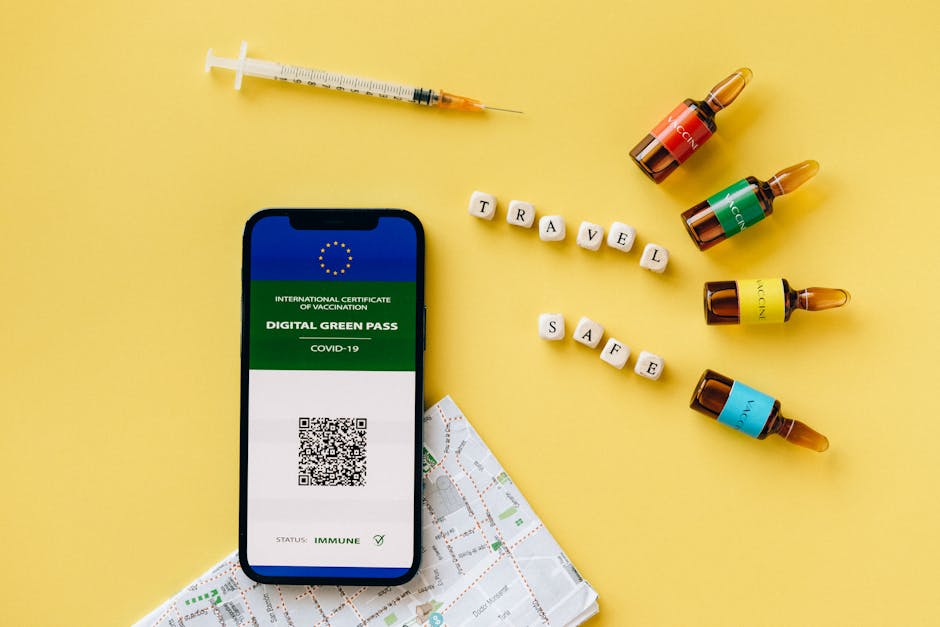
Picture this: you’re sitting in a travel clinic four weeks before your flight to Delhi, and the nurse hands you a list of eight vaccines. Some cost $150 each. Nobody is clearly explaining which of those shots Indian immigration will actually check at the border — and which are just sound medical practice your doctor wants covered.
The difference matters more than most travel health sites acknowledge. India’s vaccine rules have one specific legal requirement tied to one particular disease. Everything else falls into a separate category: recommended by health authorities for legitimate reasons, but not enforced at immigration.
Note: This article is for informational purposes only and does not constitute medical advice. Consult a licensed travel health physician or certified travel medicine clinic for guidance specific to your health history and itinerary.
What “Required” Actually Means at Indian Immigration
India officially requires only one vaccine for entry: yellow fever — and only under a specific condition. If you’re arriving from a country the World Health Organization lists as yellow fever endemic (primarily sub-Saharan Africa and parts of South America), you must present a valid International Certificate of Vaccination or Prophylaxis, commonly called the yellow card.
If you’re traveling from the United States, United Kingdom, Canada, Australia, or most of Western Europe, this requirement does not apply to you. Indian health officers at ports of entry are checking certificates from passengers arriving from endemic zones — not from low-risk countries.
| Traveler Origin | Yellow Fever Certificate Required? |
|---|---|
| Sub-Saharan Africa | Yes |
| South America (most countries) | Yes |
| USA, UK, Canada, Australia | No |
| Western Europe (most countries) | No |
| Transit through endemic country (>12 hours in airport) | Typically yes — verify with Indian consulate |
Every other vaccine you see listed under “required for India” on travel health websites is in a different category: strongly recommended by health authorities, but not a border enforcement issue. Knowing this distinction helps when you’re managing a tight pre-trip schedule and a limited budget.
Yellow Fever: The One Rule India Actually Enforces at the Border

Understanding how this requirement works in practice prevents the most common mistake travelers from endemic countries make.
The yellow fever certificate only becomes valid 10 days after vaccination. That window reflects the time the immune system typically takes to build detectable antibody levels — the certificate is meant to confirm genuine protection, not just that the injection was given. Get vaccinated three days before your flight, and the certificate technically exists but is not yet valid. Indian health officers at major airports know this, and enforcement does occur.
The yellow fever vaccine is a live attenuated vaccine — meaning it contains a weakened but living form of the virus. This makes it contraindicated for certain groups: people who are immunocompromised, those with thymus gland disorders, pregnant women, infants under 9 months, and individuals with severe egg allergies (the vaccine is produced in embryonated eggs). For travelers in these categories, a written medical exemption letter from a licensed physician — on official letterhead — is the accepted alternative. Indian health authorities generally recognize valid exemptions, though officials advise making the contraindication clear in the documentation.
In the United States, the only approved yellow fever vaccine is Stamaril, manufactured by Sanofi Pasteur. It can be administered only at a CDC-designated Yellow Fever Vaccination Center — not a standard GP office or retail pharmacy. The UK also uses Stamaril, available through MASTA travel health clinics and designated travel pharmacies. Finding a certified center often requires lead time, particularly outside major cities.
One detail that consistently trips travelers up: since 2016, the WHO declared yellow fever certificates valid for life, replacing the prior 10-year renewal rule. Most countries now follow this. However, individual immigration officers occasionally operate from older guidance. Travel medicine physicians generally advise carrying your original certificate regardless of when you were vaccinated, and keeping it with your passport rather than packed in checked luggage.
Core Vaccines Recommended for All India Travelers
These vaccines aren’t stamped into your passport at the border. They’re recommended because the disease risks behind them are well-documented in India’s epidemiological data — and because getting sick midway through a three-week trip is a specific kind of miserable that’s largely preventable.
- Hepatitis A: Transmitted through contaminated food and water, and food handling standards across India range from excellent to genuinely unsafe, sometimes within the same neighborhood. Havrix (GSK) and Vaqta (Merck) are both single-dose vaccines providing protection within two weeks. A booster 6–12 months later extends protection to an estimated 25 years. Most travel medicine physicians treat this as non-negotiable for India, regardless of itinerary.
- Typhoid: Also food and waterborne, and common enough in India that most travel clinics include it automatically. Two forms exist. Injectable Typhim Vi (Sanofi Pasteur) is a single dose given at least 2 weeks before travel, with roughly 55–70% efficacy over 3 years. Oral Vivotif (Emergent BioSolutions) is taken as 4 capsules on alternating days over one week, requires refrigeration, and is generally considered more effective at around 67%. Neither form is 100% protective — food hygiene remains important regardless.
- Hepatitis B: Transmitted through blood and bodily fluids. If you received childhood immunization you’re likely covered, but worth confirming. If not, Engerix-B (GSK) or Recombivax HB (Merck) are the standard options. The full series is 3 doses over 6 months, but an accelerated 3-dose schedule over 21 days provides meaningful protection for travelers with limited lead time.
- Tetanus/Diphtheria/Pertussis: A straightforward booster if more than 10 years have passed since your last Tdap. Boostrix (GSK) and Adacel (Sanofi) both cover all three with a single injection. No minimum lead time required.
| Vaccine | Brand Options | Doses Required | Minimum Lead Time |
|---|---|---|---|
| Hepatitis A | Havrix, Vaqta | 1 (+ booster 6–12 months later) | 2 weeks |
| Typhoid (injectable) | Typhim Vi | 1 | 2 weeks |
| Typhoid (oral) | Vivotif | 4 capsules over 1 week | 1 week minimum |
| Hepatitis B | Engerix-B, Recombivax HB | 3 (standard or accelerated) | 3 weeks (accelerated schedule) |
| Tdap | Boostrix, Adacel | 1 | None |
Japanese Encephalitis and Rabies: Who Actually Needs These Shots
Itinerary specifics genuinely change the calculus here. Health authorities don’t recommend these vaccines for every India traveler — but for certain trips, skipping them carries documented risk.
Does Japanese Encephalitis vaccination make sense for your trip?
Japanese Encephalitis is a viral brain infection transmitted by Culex mosquitoes that breed in flooded agricultural land — rice paddies in particular. Risk concentrates in rural areas and peaks during and just after monsoon season (July through October). Exposure risk in major urban centers like Delhi, Mumbai, or Bangalore is substantially lower than in agricultural regions.
The only JE vaccine available in most Western countries is IXIARO (Valneva), a two-dose series given 28 days apart, meaning you need to start at least 5 weeks before travel to complete it. Travel medicine physicians typically recommend IXIARO for travelers spending more than a month in India, visiting rural zones during or after monsoon, or working in agricultural or field research settings. For a 12-day trip covering Rajasthan’s cities, Agra, and Mumbai, health authorities generally consider the urban exposure profile low enough to skip the series — though this is worth confirming at a travel clinic given your specific stops.
What about the rabies vaccine?
India accounts for an estimated 36% of global human rabies deaths annually. Stray dogs are ubiquitous in both urban and rural areas, and monkey interactions at temple sites create a secondary risk that surprises some travelers.
Pre-exposure prophylaxis consists of 3 doses of Imovax Rabies (Sanofi) or RabAvert (Bavarian Nordic) given over 21–28 days. It doesn’t eliminate the need for post-exposure treatment if you’re bitten, but it significantly simplifies treatment: reducing the post-exposure course from 5 doses to 2, and removing the requirement for human rabies immunoglobulin (HRIG), which can be difficult to source reliably in remote parts of India.
For a short urban trip with careful animal avoidance, rabies pre-exposure vaccination is worth discussing but not universally recommended. For extended rural travel, multi-week trips through areas distant from hospitals, or any itinerary involving animal contact, travel medicine physicians generally consider it the appropriate choice.
Malaria Medication Is Not a Vaccine — And That Gap Costs Travelers
There is currently no approved malaria vaccine recommended for adult travelers visiting India. Prevention means antimalarial medication — taken consistently before, during, and after travel — combined with mosquito bite avoidance. Treating malaria prevention as a checkbox handled at your vaccine appointment is one of the most consistent oversights in India trip preparation.
Whether you need prophylaxis depends on your specific itinerary. Malaria risk across India is uneven:
- Higher risk: Rural Rajasthan, Odisha, Jharkhand, Chhattisgarh, Madhya Pradesh, most northeastern states
- Moderate risk: Goa, Kerala, rural Karnataka and Andhra Pradesh
- Generally low risk: Urban core areas of Delhi, Mumbai, Bangalore, and Chennai
Three medications are typically prescribed for India-bound travelers:
- Malarone (atovaquone/proguanil, GSK): One tablet daily, starting 1–2 days before entering a malaria zone, continued 7 days after leaving. Fewest side effects of the three options. Cost is higher — typically $5–$8 per tablet out of pocket in the US, though generics are more accessible now.
- Doxycycline: A broad-spectrum antibiotic taken daily. Inexpensive (often under $1/day for generic), effective, but causes photosensitivity — a meaningful drawback when temperatures across much of India exceed 35°C. Not appropriate for pregnant women or children under 8.
- Mefloquine (Lariam): Weekly dosing. Effective, but carries a higher rate of neuropsychiatric side effects including vivid dreams, mood changes, and anxiety. Travel medicine physicians generally consider it a third-line option now, after Malarone and doxycycline.
How Far in Advance to Start Your Vaccine Planning
Work backwards from your departure date. Leaving this too late is the single most avoidable problem in pre-India health preparation.
- 8–10 weeks before departure: The ideal start point. You have time for multi-dose series (Hepatitis B accelerated schedule, Japanese Encephalitis), appointment availability at certified yellow fever centers, and the 10-day post-vaccination window for the yellow fever certificate. This is when you want to schedule your travel clinic visit.
- 6 weeks out: Still workable for most vaccines. The standard 6-month Hepatitis B series is no longer feasible, but the accelerated 3-dose schedule over 21 days is. JE vaccination on the 2-dose schedule is completable. Yellow fever is fine if you move within the week.
- 4 weeks out: Focus on single-dose vaccines — Hepatitis A, Typhim Vi, Tdap. Get your malaria prescription at the same appointment. JE won’t be completable at this point unless you started earlier. This is a manageable situation for travelers doing urban India on a short trip.
- 2 weeks or fewer: Prioritize single-dose options still available and sort malaria medication immediately. Hepatitis A and injectable typhoid protection will be active by the time you fly if you act in the next 48 hours. Not the ideal scenario — but not hopeless for a short urban-focused itinerary.
Travel Clinic vs. GP: One Is Clearly the Right Answer
Go to a travel health clinic, not your regular GP.
General practitioners are not always current on region-specific outbreak alerts, the malaria risk difference between rural Rajasthan and central Mumbai, or which antimalarial is appropriate for a given patient profile. Travel medicine is a specialty. Clinics — whether a dedicated center, a Passport Health location in the US, MASTA in the UK, or a certified travel health pharmacy — track this specifically. They also maintain the certified status required to administer Stamaril, which a standard GP cannot legally provide.
If cost is a real constraint: use the travel clinic for the consultation and for any vaccine requiring certified administration. In the UK, Hepatitis A and typhoid are often available through the NHS for travel purposes — call your GP after the travel clinic visit to see which shots can be administered under NHS coverage. In the US, check whether your travel clinic accepts insurance for recommended vaccines; many do. The consultation fee is worth paying even if you fill some prescriptions elsewhere.