
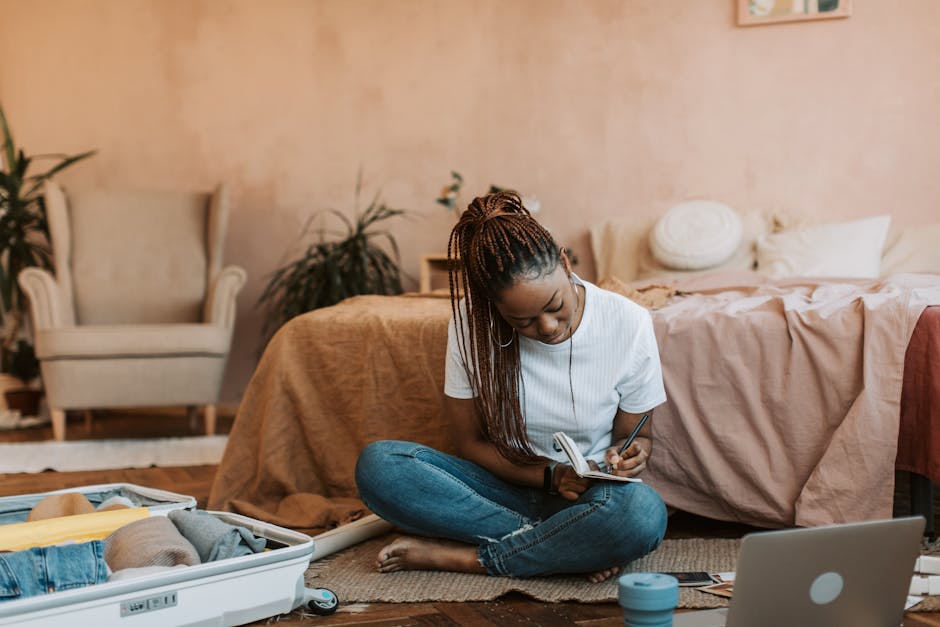
Most first-time travelers to Arab countries make the same mistake: they read one blog post about dressing modestly, throw in some long sleeves, and consider the packing done. Then they arrive in Dubai in July wearing dark cotton and realize their entire system was built around the wrong assumptions. “Conservative” and “practical” are not the same thing. Packing right for Arabic-speaking destinations — Morocco, Egypt, Jordan, the UAE, Oman, Saudi Arabia — requires thinking through dress codes by country, climate by month, and terrain by itinerary. These countries are not interchangeable, and neither is what belongs in your bag.
Dress Codes Are Not Uniform Across Arab Countries
One of the most persistent myths about Arab travel is that all these destinations operate under the same rules. They don’t. Egypt’s coastal resorts have different expectations than Cairo’s old city. UAE malls allow shorts while UAE mosques require full coverage. Morocco’s medinas call for different gear than its Atlantic surf beaches.
| Country | Urban/Medina | Beaches | Religious Sites | Key Requirement |
|---|---|---|---|---|
| Morocco | Loose trousers, covered shoulders | More relaxed at beach towns like Essaouira | Head scarf for women | Shoulders and knees covered in medinas |
| Egypt | Shoulders and knees covered | Swimwear fine at Red Sea resorts | Head covering required | More relaxed in Cairo than rural Upper Egypt |
| Jordan | Modest in cities | Swimwear at Aqaba | Head covering in mosques | Generally relaxed for tourists |
| UAE | Casual fine in malls, modest in souks | Swimwear on resort beaches | Modest required | Cover shoulders and knees in mosques and souks |
| Oman | Conservative dress expected | Swimwear at resort beaches only | Very conservative | Most conservative Gulf state for visitor dress |
| Saudi Arabia | Modest dress required | Gender-separated beach areas | Strict adherence | Significantly loosened since 2019 reforms; still strict at sites |
If you’re visiting multiple countries on one trip, your packing needs to thread the needle between all of them. Build around versatile pieces that cover knees and shoulders as a baseline, then add or remove layers depending on context. Saudi Arabia has relaxed dress requirements considerably since 2019, but rules around religious sites remain strict — and the safest starting point is still modest dress until you’ve assessed local context on arrival.
The Clothing System That Actually Works in 40°C Heat
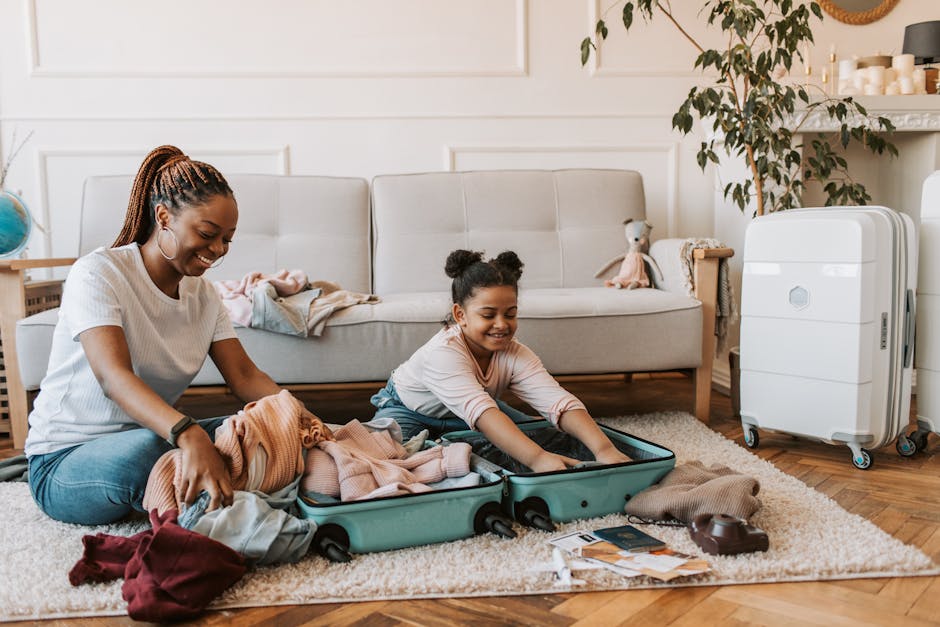
Modesty and heat management are not opposing forces — they just require the right fabrics. The reason most travelers struggle is that they bring modest clothes designed for temperate climates: thick linen trousers, dense cotton maxi dresses, heavy scarves. These work in London. They fail in Luxor.
The solution is a layering system built around lightweight, breathable fabrics that cover without trapping heat.
What women should actually pack
The foundation is a linen or moisture-wicking base layer — specifically loose, not form-fitting. prAna makes travel trousers in lightweight nylon that dry in an hour and compress to the size of a fist. Over that, a loose long-sleeved shirt in a technical fabric handles sun protection and modesty requirements simultaneously. REI Co-op’s Sahara UPF long-sleeve runs under $40 and is one of the most-tested options for exactly this kind of travel.
A lightweight scarf — pashmina-weight, not a thick wool wrap — goes in the day bag. It doubles as a shoulder cover, a mosque head covering, and a neck sun shield. Bring two. They weigh nothing and take up no space.
For shoes: closed-toe sandals like Birkenstock Arizonas or Teva Universals handle medina cobblestones, beach walks, and restaurant dinners interchangeably. One pair of slip-ons means no wrestling with laces at every mosque entrance.
What men need — and why less is more
Lightweight chino-style trousers — Uniqlo AIRism or Columbia Silver Ridge convertible pants — plus short-sleeved linen shirts form the core. In most Arab countries, men’s requirements are less strict. Shorts in cities often draw looks rather than legal issues. But knee-length trousers read as smarter and get you better treatment everywhere from souks to nicer restaurants.
Avoid black and dark colors in summer. In 45°C direct sun, dark fabric becomes a heat collector. This isn’t style advice — it’s physics. Light grays, whites, and earth tones make the difference between a comfortable afternoon and a miserable one.
Most trips to Arab countries work on a four-day clothing rotation. Technical fabrics handwash and dry overnight. Bring less than you think you need, consistently.
Documents and Tech: One Decision You Must Make Before Landing
Install a VPN before you board the plane. Social media apps, video call services, and some news sites are geo-blocked in certain Gulf states — and VPN apps cannot be downloaded once inside those countries. ExpressVPN and NordVPN both work reliably. For everything else: an unlocked phone with a local SIM (available at every major Arab airport for $5–$15) beats international roaming by a wide margin. Egypt’s Vodafone and UAE’s du SIM both offer solid data packages. Download Google Maps offline tiles for your destinations before departure.
Climate Gear Varies More Than You Expect
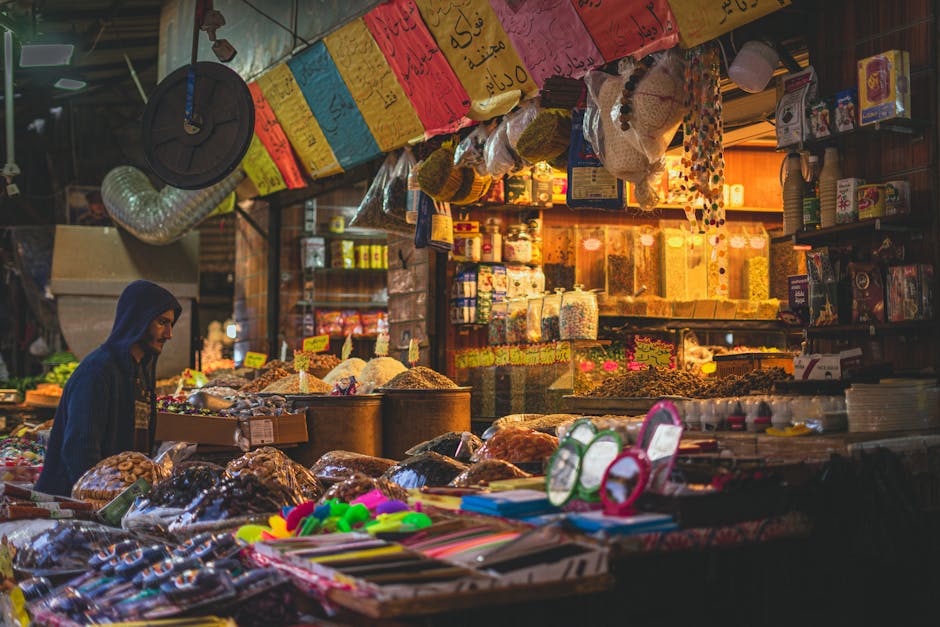
Arab countries span climates from sub-Saharan heat to Mediterranean cool to high-altitude cold. Petra, Jordan drops to 2°C in January. Riyadh hits 48°C in July. Casablanca is mild year-round. There is no single climate packing list — season and destination dictate everything.
Summer travel in Gulf states and Egypt (May–September)
- A packable sun hat with UPF 50+ rating — the Columbia Bora Bora Booney is the standard recommendation for good reason: structured brim, ventilated, under $40
- Electrolyte tablets such as Liquid IV — heat exhaustion hits fast when walking 20,000 steps through a medina in direct sun
- Sunscreen SPF 50+; check bottle size against airline liquid rules or plan to buy on arrival
- A light linen blazer or cardigan — Gulf mall air conditioning is set to 18°C; you will want a layer indoors regardless of outdoor temperatures
- An insulated water bottle (Hydro Flask or Stanley) — staying hydrated in serious heat requires a bottle that actually keeps water cold
Winter travel in Morocco, Jordan, Sinai (November–February)
- A packable down jacket — Marrakech drops to 5°C at night in January, Petra is colder, Amman can see snow
- Waterproof walking shoes — Marrakech medina in rain becomes ankle-deep in places
- Thermal base layer for overnight desert camps or any high-altitude trekking
Year-round essentials regardless of destination
- Universal power adapter — Arab countries use a mix of Type C, G, and F plugs
- Portable charger (20,000mAh minimum) — long days and heavy phone use for navigation drain batteries before dinner
- Zippered day bag, not an open tote — reduces opportunistic theft in crowded medinas
Health and Personal Care: Answers to the Questions That Actually Matter
Which medications should you bring versus buy locally?
Pharmacies in major Arab cities — Cairo, Dubai, Amman, Casablanca — are well-stocked and pharmacists frequently speak English. You don’t need to pack for every possible scenario. What you do need: any prescription medication accompanied by a doctor’s letter (some medications legal elsewhere are controlled substances in Gulf states — check the specific country’s health ministry list in advance), an antidiarrheal like Imodium for the first few days of cuisine adjustment, and oral rehydration salts. That’s it.
Is tap water safe to drink?
No, not in most Arab countries outside the UAE and parts of Jordan. A filtered water bottle — the Grayl Geopress or LifeStraw Go — reduces plastic waste and saves meaningful money over a two-week trip. This matters because dehydration in summer heat is a real medical risk, not a comfort issue. The Grayl Geopress filters in 8 seconds and handles sediment, bacteria, and viruses.
What personal care products are hard to source locally?
Sunscreen above SPF 30 is easier to find in cities like Casablanca and Cairo than in Gulf states, where higher SPFs sometimes appear only in expat-facing supermarkets. Women’s sanitary products are available in all major cities. Prescription skincare — tretinoin, specific actives — is not reliably available and varies by country’s pharmaceutical regulations. Mainstream toiletry brands are broadly available in UAE supermarkets; specialty items may not be. Bring a full supply of anything you can’t easily replace.
Seven Things Most Travelers Pack That Cause Problems
This list costs travelers weight, space, and occasionally a customs conversation they didn’t want to have.
- A full-size towel. Arab country hotels provide towels, and desert camp operators provide them too. A microfiber travel towel handles the rare exception without taking up a third of your bag.
- More than two pairs of shoes. One walking sandal, one smarter flat or loafer. Sneakers add bulk, heels are useless on medina cobblestones, and hiking boots are only necessary for specific itineraries like Jebel Shams in Oman or Sinai trekking.
- Expensive jewelry. Petty theft is relatively low in most Arab countries compared to European tourist cities — but there is no reason to bring pieces you would be genuinely upset to lose.
- Physical guidebooks. A Lonely Planet weighs 600g and is partially outdated before print. An offline-ready phone replaces it entirely, with more current information.
- Alcohol in checked luggage. Banned outright in Saudi Arabia and Kuwait. Technically allowed in some other countries but flagged or confiscated inconsistently. The risk-to-reward ratio is not worth it.
- Revealing swimwear for non-resort areas. At a resort in Hurghada or Sharm el-Sheikh, a standard swimsuit is fine. At a public beach in Alexandria or coastal Oman, it’s not. A rash guard or sarong bridges the gap between both contexts without taking extra space.
- Large checked luggage. Medina streets are narrow. Egyptian and Moroccan taxis don’t fit large suitcases in the boot. Moroccan trains have awkward overhead storage. A 40L backpack — the Osprey Farpoint 40 or Tortuga Setout — handles most two-week trips with space to spare, and keeps you mobile everywhere.
Matching Your Pack to Your Actual Itinerary
The packing list for a week in Dubai is not the same list as two weeks across Morocco. These trips require different gear, different document prep, and a different relationship with how much you carry.
City-focused trips — Dubai, Amman, Cairo — put you mostly in air-conditioned spaces: malls, museums, restaurants, hotels. Outdoor exposure is largely transit between them. Light, modest, smart-casual clothing dominates. Dubai especially rewards looking put-together; certain restaurants and venues turn away travelers in hiking gear.
Medina and souk travel in Marrakech, Fez, or Cairo’s Khan el-Khalili means dusty, narrow, cobblestoned, crowded streets all day. Closed-toe shoes only. A zippered day bag. A small padlock for a riad or hostel locker. Packing light matters more here than anywhere else on this list.
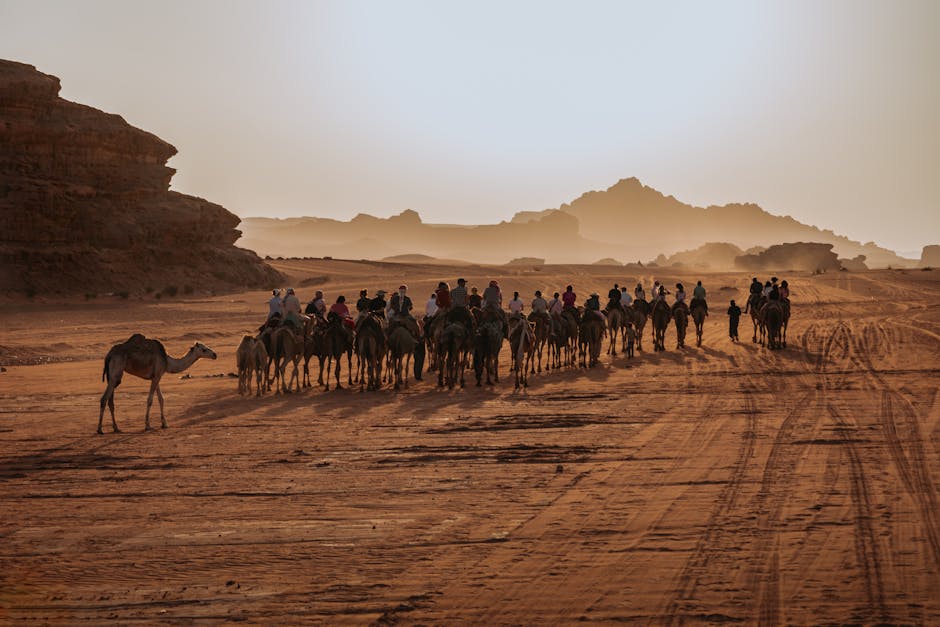
Desert and nature trips — Wadi Rum, Morocco’s Sahara, Egypt’s White Desert — bring a 25°C temperature swing between midday and midnight. Sand infiltrates everything. A dry bag liner protecting electronics is not optional. A headlamp is non-negotiable; the Black Diamond Spot 400 is the standard choice for desert travel: waterproof, long battery, bright enough for navigation without a moon.
| Trip Type | Key Extra Items | Leave Behind |
|---|---|---|
| Urban Gulf | Smart-casual outfits, VPN installed before arrival | Hiking gear, heavy jacket |
| Medina/Souk | Zippered day bag, closed shoes, small padlock | Heels, open totes, valuables |
| Desert/Nature | Headlamp, packable down jacket, dry bag liner | Heavy cotton, extra shoes |
| Beach/Resort | Rash guard, reef-safe sunscreen, sarong | Excess conservative layers |
| Multi-country | Universal adapter, VPN, versatile neutral layers | Single-use or country-specific items |
The traveler who gets this right stopped trying to prepare for every possible scenario and built a flexible 8–10 item clothing system instead. Back to that original scenario: the person arriving in Marrakech with two linen shirts, one pair of lightweight trousers, a packable down jacket, and two pashmina scarves spends exactly zero time thinking about clothes — and all their time actually being in the place.