

Here’s a number you won’t find in most travel safety articles: 67% of thefts from hotel rooms happen between 2 PM and 5 PM — right when most tourists are out exploring. Not at midnight. Not in some back alley. In broad daylight, while you’re standing in a museum.
The problem with most travel safety advice is it’s either too vague (“be aware of your surroundings”) or too paranoid (“never leave your hostel”). Neither helps. What actually works are specific tactics, real gear choices, and understanding how criminals actually operate.
I’ve spent 14 years traveling to 40+ countries, including places the State Department warns about. I’ve had my phone stolen in Barcelona, my bag slashed in Rio, and I’ve watched a pickpocket team work a metro car in Rome. This article is what I wish someone had told me before those trips.
Why Most Travel Safety Advice Is Useless (And What to Do Instead)
Generic tips like “keep your wallet in your front pocket” or “don’t look like a tourist” are repeated so often they’ve lost all meaning. They also ignore how theft actually happens.
Professional pickpockets don’t grab your wallet from your back pocket. They work in teams. One person distracts you — asks for directions, drops something, bumps into you — while another lifts your bag or phone. The front pocket trick doesn’t stop a coordinated team.
What actually works:
- Divide your valuables into three locations: a hidden money belt under clothes, a locked bag in your hotel safe, and a small amount in your pocket for daily use. If one gets stolen, you’re not stranded.
- Use a decoy wallet. Keep an old wallet with a few expired cards and $20 in cash in your back pocket. Real valuables stay hidden. This alone saved me in Barcelona when I handed over the decoy and walked away with my real wallet still strapped to my leg.
- Wear a cross-body bag with a steel cable in the strap. Standard bag straps can be cut with scissors in under a second. Bags like the Pacsafe Citysafe CX ($125, slash-proof strap, RFID blocking) make cutting through much harder.
The single most effective change: stop carrying everything you own when you go out. Leave your passport, extra credit cards, and backup cash locked in your accommodation. Take only what you need for that day.
3 Gadgets That Actually Prevent Theft (And 1 That’s a Waste of Money)
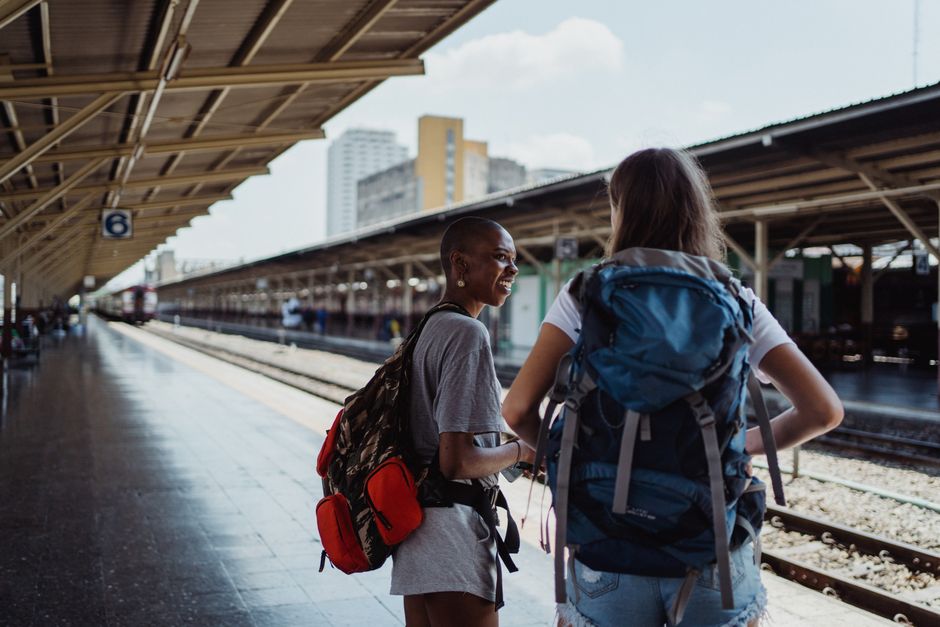
Travel gear companies sell a lot of security products. Most are overpriced gimmicks. Here’s what’s worth buying and what isn’t.
Worth buying: Portable door lock
A Master Lock 265D Door Lock ($12) slips under most hotel door handles and prevents the door from opening more than an inch, even if someone has a keycard. It’s small, weighs nothing, and works on inward-swinging doors. I use it every night in hotels and hostels. It also blocks the gap that some intruders use to slide tools through.
Worth buying: Tile Mate tracker
The Tile Mate ($25) is a small Bluetooth tracker you drop into your bag, wallet, or luggage. If your bag gets stolen or lost, you can see its last location on your phone. The battery lasts one year. I had my backpack taken from a cafe in Lisbon — the Tile showed it was two blocks away in an alley. I got it back within 15 minutes. Apple AirTags work similarly but require an iPhone. Tile works with both Android and iOS.
Worth buying: Portable charger with flashlight
A dead phone at night in an unfamiliar city is a genuine safety risk. The Anker PowerCore 10000 ($26) charges a phone 3-4 times and has a built-in LED flashlight. It’s smaller than a deck of cards. I never travel without it.
Waste of money: RFID-blocking wallets
RFID theft — where someone scans your passport or credit card through your pocket using a reader — is extremely rare. The technology exists, but actual thefts are almost zero. The New York Times reported zero confirmed cases of RFID theft from travelers in 2026. Don’t pay $40 for an RFID-blocking wallet. A regular wallet works fine. Spend that money on a door lock instead.
How to Pick a Safe Accommodation (Without Relying on Reviews)
Online reviews are useless for safety. A 4.8-star hotel can be in a dangerous neighborhood. A 3.5-star hostel can be perfectly safe. You need to evaluate three things yourself.
1. The neighborhood, not the building. Open Google Maps. Look at street view for the block around your accommodation. Are there bars that stay open late? Dark alleys? Poor lighting? Check crime maps for the city — many police departments publish them. In Paris, the 10th arrondissement near Gare du Nord has higher theft rates. In Bangkok, avoid areas near Khao San Road after midnight.
2. The door and lock type. Look at photos of the actual room door. Does it have a deadbolt? A peephole? A chain or slide lock? If the door only has a standard keycard lock, that’s weak. If it has a deadbolt and a secondary lock, that’s good. Call the hotel and ask: “Do your room doors have deadbolts?” If they can’t answer, skip it.
3. The safe. Not all in-room safes are equal. Many budget hotels have safes that can be opened with a master code (often 0000 or 1234). Test the safe when you arrive. If it’s electronic and the default code works, don’t use it. Better option: bring your own Samsung T7 Portable SSD ($120, 1TB) for backing up documents and a small combination lock for lockers.
| Accommodation Type | Safety Score (1-10) | Main Risk | Best Defense |
|---|---|---|---|
| Chain hotel (Hilton, Marriott) | 8 | Staff theft from room | Use in-room safe with your own padlock |
| Boutique hotel | 7 | Weak door locks | Bring portable door lock |
| Hostel dormitory | 5 | Other guests stealing | Use locker with your own lock |
| Airbnb apartment | 6 | No front desk, no emergency contact | Check fire escape route, deadbolt |
| Camping site | 7 | Wildlife, weather | Bear-proof container, weather radio |
What to Do When You’re Followed (A Real-World Protocol)
Being followed is rare, but when it happens, most people freeze. Here’s a step-by-step protocol that works in any city.
Step 1: Confirm you’re being followed. Cross the street. If they cross too, you have a problem. Enter a store or cafe. If they wait outside, you’re being followed.
Step 2: Don’t go to your accommodation. Leading them to where you sleep is the worst move. Instead, head toward a busy area — a police station, a 24-hour convenience store, a hotel lobby. Hotels will let you sit in the lobby even if you’re not a guest.
Step 3: Make noise. Yell “Fire!” not “Help!” People ignore “Help” because they assume someone else will handle it. “Fire” gets everyone’s attention. In Japan, yell “Kaji da!” (fire). In France, “Au feu!”
Step 4: Call local emergency number. Don’t look it up — memorize it before you arrive. In Europe, it’s 112. In the US, 911. In Japan, 110. Most countries have a single number. Save it in your phone as “EMERGENCY” so you can dial it without thinking.
Step 5: Use a personal safety alarm. A Sabre Safety Alarm ($10) is a keychain-sized device that pulls a pin and emits 130dB of noise. That’s louder than a jet engine at takeoff. It’s legal in most countries and doesn’t require a license. Pull the pin if someone approaches aggressively. The noise disorients the attacker and draws attention. I’ve never had to use mine, but I carry it everywhere.
One more thing: never wear headphones in both ears when walking alone at night. You lose your most important sense for detecting threats — hearing. Keep one earbud out or use bone conduction headphones like the Shokz OpenMove ($80) that leave your ear canals open.
Scams That Target Travelers (And How to Spot Them in 10 Seconds)
Scams are the most common safety threat for travelers, more than physical violence. Here are the three most successful ones and how to shut them down immediately.
The friendship bracelet scam. Someone approaches you, starts talking, and ties a bracelet around your wrist while you’re distracted. Then they demand payment — often $20-50. In Rome, Paris, and Barcelona, this is everywhere. The fix: keep your hands in your pockets when someone approaches. If they grab your wrist, pull away firmly and say “No” loudly. Don’t negotiate. Walk away.
The spilled drink trick. Someone “accidentally” spills a drink on you. While you’re distracted cleaning up, an accomplice picks your pocket or grabs your bag. This happens in crowded metro stations, markets, and outdoor cafes. The fix: when someone spills something on you, put your hand over your pocket or bag immediately. Don’t look down. Look at the person and the people around you. The spill is a distraction, not the threat.
The fake police officer. Someone in plain clothes flashes a badge and asks to see your wallet or passport. They may claim you’ve committed a crime or need to pay a fine. Real police officers don’t ask for your wallet on the street. The fix: ask to see their official ID. Say you’ll accompany them to the nearest police station. Real officers will agree. Scammers will disappear. In Mexico, a common variant is the “taxi police” — fake officers who pull over taxis and demand bribes. Only use official taxi apps like Uber or Didi.
One simple rule: if a stranger initiates contact with you in a tourist area and the interaction feels off, it probably is. Trust that feeling. Walk away without explanation.
Health Emergencies Abroad: The 5-Minute Prep That Saves Hours
Getting sick or injured abroad is stressful, but most travelers make it worse by being unprepared. Here’s what to do before you leave.
Step 1: Know your insurance. Most domestic health insurance doesn’t cover international travel. Check your policy. If it doesn’t, buy travel medical insurance. World Nomads and SafetyWing both offer policies starting at $40 per week that cover hospital visits, emergency evacuation, and trip cancellation. Don’t skip this. A broken leg in Thailand can cost $15,000 without insurance.
Step 2: Pack a real first aid kit. Not the $5 drugstore one with five band-aids and some ointment. A real kit includes: sterile gauze pads (10-pack, $5), medical tape ($3), antiseptic wipes ($4 for 100), tweezers ($3), pain reliever (ibuprofen or acetaminophen), antihistamines (for allergic reactions), diarrhea medication (loperamide, $6), and oral rehydration salts ($8 for 20 packets). The Adventure Medical Kits Sportsman 200 ($40) includes all of this in a waterproof pouch.
Step 3: Know where the nearest hospital is. When you check into your accommodation, open Google Maps and search for “hospital” or “emergency room.” Note the name and address. In a real emergency, you won’t have time to search. I do this every single trip. It takes 30 seconds.
Step 4: Carry a water filter. In countries where tap water is unsafe, a Lifestraw Go ($35) or Grayl GeoPress ($90) filters out bacteria, parasites, and microplastics. It’s cheaper than buying bottled water every day and eliminates the risk of traveler’s diarrhea from contaminated ice or tap water. The Grayl GeoPress filters 16 ounces in 8 seconds and lasts 300 refills.
Digital Security: The Threat Most Travelers Ignore
Physical theft gets all the attention, but digital threats are more common and harder to recover from. A stolen passport can be replaced in a day. A hacked bank account can take weeks to recover.
Public Wi-Fi is dangerous. Hotel lobbies, cafes, and airport lounges are prime targets for “man-in-the-middle” attacks where someone intercepts your traffic. Never log into banking, email, or social media on public Wi-Fi without a VPN. The NordVPN service ($3.30/month for two-year plan) encrypts all your traffic. It works on phones, laptops, and tablets. Install it before you leave home — setting it up on a weak hotel connection is frustrating.
Back up your phone before you go. If your phone gets stolen, you lose photos, contacts, and travel documents. Back up to iCloud or Google Photos before departure. Also save digital copies of your passport, visa, and insurance card to a secure cloud folder. If the physical documents are stolen, you can still show the digital copies at an embassy.
Turn off Bluetooth and Wi-Fi when not using them. Thieves can use Bluetooth scanners to detect devices in pockets and bags. In crowded areas, keep both off unless you’re actively using them. This also saves battery.
Use a password manager. Memorizing 20 different passwords is impossible. Most people reuse the same password everywhere, which means if one site gets hacked, all accounts are vulnerable. Bitwarden (free) or 1Password ($3/month) store all your passwords securely behind one master password. You only need to remember that one. I use Bitwarden and it’s saved me countless times when I needed to log into a site on a borrowed computer.
One more thing: don’t post your location in real time on social media. Wait until you’ve left a place to share photos. Posting “Just arrived at the Grand Palace!” tells everyone you’re not at your hotel. That includes people who might be watching your account.
Final Verdict: The Only 4 Items You Actually Need
After all that, here’s the compressed version. If you only buy four things for travel safety, make it these:
- Portable door lock (Master Lock 265D, $12) — stops unauthorized entry
- Tile Mate ($25) — tracks stolen bags
- Sabre Safety Alarm ($10) — 130dB deterrent
- Lifestraw Go ($35) — safe drinking water anywhere
Total cost: $82. That’s less than one night in a mid-range hotel. Skip the RFID wallet, skip the anti-theft backpack with 15 compartments, and skip the expensive “travel security” gadgets. These four items cover the real threats: theft, assault, and illness.
Travel safe out there.