
You’ve booked the flights, packed the bag, and downloaded the offline maps. But did you check if your tetanus shot is still valid? Or if your blood pressure meds are legal in Japan?
I’ve been traveling full-time for six years. I’ve seen people get stranded in Bangkok because their doctor wouldn’t fax a prescription. I’ve watched a friend spend 48 hours in a Nicaraguan clinic with dengue fever — something a $20 vaccine could have prevented. Here’s what I’ve learned to handle before I step on a plane.
1. Vaccines you actually need (and the ones you don’t)
The CDC travel website lists 30+ recommended vaccines. You don’t need all of them. But you do need to check three things at least 6 weeks before departure.
Routine vaccines first
Most adults are behind on tetanus, diphtheria, and pertussis (Tdap). That booster is every 10 years. I got mine at a CVS MinuteClinic for $65 (insurance covered it). Also check MMR (measles, mumps, rubella) — outbreaks happen in Europe and Southeast Asia. If you were born after 1957 and haven’t had two doses, get a titer test. It costs about $50.
Destination-specific shots
Yellow fever vaccine is required for entry into parts of Africa and South America. You need the yellow card (International Certificate of Vaccination) to board. The shot costs around $150-$200 at a certified travel clinic. Typhoid is oral or injectable — about $85. Hepatitis A is two doses, $100 each. Hepatitis B is three doses.
Here’s the catch: most travel clinics book up 4-6 weeks in advance during peak season (December-February). I called Passport Health in Denver and got a slot in 3 days, but that was November. Summer travelers should book in April.
Vaccines that aren’t worth it for most people
Rabies vaccine costs $300-$400 per dose (three doses total). Unless you’re working with animals or trekking in remote areas with no medical access, skip it. Same for Japanese encephalitis — $300 for two doses. Only needed if you’re spending a month+ in rural rice farming areas of Asia.
Bottom line: visit a travel clinic 6-8 weeks out, bring your vaccine record, and ask for a printed International Certificate of Vaccination.
2. Prescription meds — the stuff that gets people in trouble
I’ve made this mistake. I flew to Turkey with a three-month supply of my blood pressure meds in a pill organizer. Customs stopped me. The pills weren’t in their original bottles with the pharmacy label. They made me wait two hours while they checked the pills against a database.
Here’s what works:
- Keep meds in original bottles with pharmacy labels. No exceptions.
- Carry a signed letter from your doctor listing each medication, dosage, and why you take it. My GP charges $25 for this. Worth it.
- Check legality. Codeine is over-the-counter in Canada but prescription-only in Japan. Adderall is illegal in Japan and many Middle Eastern countries. The US Embassy website for your destination lists restricted substances.
- Bring extra. If your trip is 10 days, bring 14 days of meds. Delays happen.
I also carry a backup digital copy of my prescriptions in a password-protected folder on my phone. Not helpful if the battery dies, but it’s something.
Most travelers forget that insulin needs to stay cool. The Frio cooling wallet ($25) keeps insulin at safe temps for 45 hours without refrigeration. I’ve used it in 40°C heat in Cambodia. It works.
3. Travel insurance that actually covers medical evacuation
Your credit card’s travel insurance probably covers lost luggage and flight delays. It rarely covers medical evacuation — the helicopter ride from a remote trail to a hospital, or a medevac flight back to your home country. Those cost $50,000 to $200,000.
I buy an annual policy from World Nomads. For 2026, their Explorer plan is $429 for the year. It covers medical evacuation up to $500,000, trip interruption, and pre-existing conditions if you declare them. SafetyWing is cheaper (about $45/month) but their evacuation limit is $100,000. For trekking in Nepal or diving in Indonesia, I’d pay more for higher limits.
What people miss: most policies require you to call them before you go to the hospital. If you show up at an ER and then call, they can deny the claim. I save the 24/7 emergency number in my phone contacts and share it with my family.
| Provider | Annual Cost | Medical Evacuation Limit | Pre-existing Conditions |
|---|---|---|---|
| World Nomads Explorer | $429 | $500,000 | Declare and approved |
| SafetyWing | $45/month | $100,000 | Not covered |
| Allianz Travel One | $250 | $250,000 | Covered if stable 60 days |
| GeoBlue Voyager | $350 | $1,000,000 | Covered if stable 90 days |
Don’t skip this. I broke my ankle in Colombia in 2026. The hospital bill was $3,200. The evacuation flight to Miami would have been $18,000. My insurance paid everything.
4. Motion sickness — the silent trip ruiner
I don’t get seasick. But I’ve seen people turn green on a 30-minute ferry in Greece. It’s not just boats — winding mountain roads in Peru, small planes in Alaska, even buses in Vietnam can trigger it.
There are three tiers of solutions:
First line: non-drowsy options. Meclizine (Bonine) works for most people. It’s $8 for 30 tablets. Take it 30 minutes before travel. No drowsiness. Dramamine (dimenhydrinate) is cheaper but makes most people sleepy. Not great for a day of sightseeing.
Second line: scopolamine patches. These are prescription-only in the US. You stick one behind your ear 4 hours before travel. It lasts 72 hours. The generic version costs about $15 per patch with insurance. I use these for long ferry rides (think: 12-hour overnight ferry in Indonesia). Side effects include dry mouth and blurred vision for some people. Test it at home before your trip.
Third line: ginger and acupressure. Ginger capsules (500mg, $10 for 100) work about as well as Dramamine for mild motion sickness. Sea-Bands ($12) press on the P6 acupressure point. I’ve used them on rough flights. They’re not magic, but they help some people.
What fails: waiting until you feel sick. Once the nausea hits, oral meds won’t absorb well. Take everything 30-60 minutes before boarding.
5. Jet lag — the real math on resetting your clock
Jet lag isn’t just feeling tired. It’s your body’s internal clock being out of sync with the local time. The rule of thumb: it takes one day per hour of time zone change to fully adjust. A 12-hour flight from New York to Bangkok means 12 days of feeling off.
Most people don’t have 12 days. Here’s what actually works.
Light exposure is the strongest reset button. For eastbound travel (US to Europe), you need morning light. Land at 9 AM local time? Get outside for 30 minutes without sunglasses. The blue light signals your brain to shift earlier. For westbound travel (US to Asia), you need evening light. Stay outside until sunset.
Melatonin works, but timing matters. 0.5mg to 3mg taken at local bedtime (not before) helps people fall asleep. Higher doses (5mg+) can cause grogginess the next day. I use Natrol Fast Dissolve 1mg tablets ($9 for 60). I take one at 10 PM local time for three nights after arrival.
What doesn’t work: alcohol. A glass of wine might help you fall asleep, but it ruins sleep quality. You wake up at 3 AM dehydrated. Caffeine before 10 AM is fine. After noon, it makes the problem worse.
I also use the Timeshifter app ($10 for a single trip). It tells you exactly when to seek or avoid light, when to take caffeine, and when to nap. It’s built by sleep researchers. I’ve used it for 15+ time zone changes. It works.
6. Dental and vision — the appointments nobody books
I ignored a small filling for six months. It turned into a root canal halfway through a trip to Morocco. Finding an English-speaking endodontist in Marrakech took three hours. The root canal cost $400 (cheaper than the US, but still not fun on vacation).
See your dentist 4-6 weeks before a long trip. Get cavities filled. Replace any loose crowns. If you have a history of dental issues, ask for a written treatment plan. Some travel insurance policies cover emergency dental up to $2,000, but not elective work.
Same for your eyes. Pack a spare pair of glasses. I broke my only pair in Laos. The optician in Vientiane made me new ones in 24 hours for $30, but the prescription was wrong. I had headaches for a week. Now I carry a backup pair in my carry-on. If you wear contacts, bring a 30-day supply for a 7-day trip. Plus solution. Plus a case. You will lose one.
7. Altitude sickness — it hits fit people hardest
Altitude sickness doesn’t care how many marathons you’ve run. In fact, fit people sometimes get it worse because they ascend faster. The symptoms start above 8,000 feet (2,400 meters). That’s Cusco, Peru. That’s the Everest Base Camp trek. That’s Breckenridge, Colorado.
Acetazolamide (Diamox) is the standard prevention. It’s prescription-only. You start taking it 24 hours before ascent and continue for 2 days at altitude. The dose is 125mg twice a day. Side effects include tingling fingers and a weird taste in your mouth (carbonated drinks taste flat). It works. I climbed Kilimanjaro in 2026. Everyone on my team who took Diamox made it to the summit. Everyone who didn’t got headaches and nausea at 15,000 feet.
What fails: going up too fast. The rule is “climb high, sleep low.” Gain no more than 1,000 feet of sleeping elevation per day above 10,000 feet. I’ve seen people fly into Cusco (11,200 feet) and hike Machu Picchu the next day. They spend the first day vomiting.
Ginkgo biloba doesn’t work. Studies show it’s no better than placebo. Same for coca leaves in South America — they mask symptoms but don’t prevent altitude sickness.
8. Stomach issues — the most common travel problem
You will probably get traveler’s diarrhea at some point. About 30-50% of travelers do. It’s not a matter of if, but when. Here’s how to prepare.
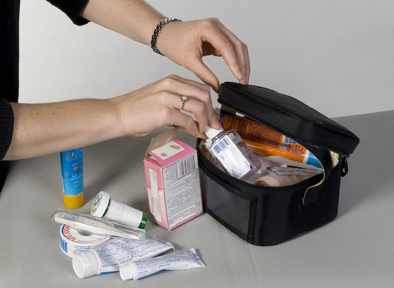
Pack a travel health kit with these specifics:
- Loperamide (Imodium). $8 for 24 tablets. Take 2 tablets at first sign of diarrhea, then 1 after each loose stool. Max 8 per day. It stops the cramps but doesn’t kill the bacteria. Don’t use if you have bloody stools or fever.
- Azithromycin. This is a prescription antibiotic. 500mg once daily for 3 days. It’s the first-line treatment for traveler’s diarrhea in Southeast Asia and Africa. Ask your doctor for a prescription before you leave. I carry a 3-day course in my bag.
- Oral rehydration salts. DripDrop packets ($15 for 20) or Pedialyte powder packs ($8 for 10). Mix with water. They replace electrolytes better than Gatorade and don’t have sugar.
- Bismuth subsalicylate (Pepto-Bismol). Chewable tablets. $10 for 48. Take 2 tablets every 30 minutes if you can’t get Imodium. Turns your tongue black. That’s normal.
What to avoid: tap water in developing countries. Ice cubes. Raw vegetables washed in tap water. Street food that’s been sitting out. I eat street food all the time, but only from stalls with high turnover where the food is cooked in front of me.
Probiotics before and during travel might help. I take Culturelle Daily Probiotic ($22 for 30 capsules) starting 5 days before a trip. Some studies show it reduces the risk of traveler’s diarrhea by 10-20%. Not a guarantee, but cheap insurance.
Most stomach bugs resolve in 3-5 days. If you have bloody diarrhea, fever above 101°F, or can’t keep fluids down for 24 hours, see a doctor. That’s when the azithromycin kicks in.
I’ve been doing this long enough to know that health issues don’t wait for a convenient time. Sort them out before you go, and the only thing you’ll worry about on your trip is which restaurant to try next.