
Most “eco-friendly” hotels in Costa Rica slap a recycling bin in the room and call it sustainable. Then they charge you $500 a night for a room without AC. That’s not eco-friendly. That’s a markup on discomfort.
I reviewed 20+ properties across Costa Rica in early 2026. I looked at actual sustainability certifications (not marketing claims), real nightly rates, and what you get for your money. These 7 are the only ones that passed both the eco test and the value test.
What Makes a Hotel Actually Eco-Friendly in Costa Rica?
Costa Rica has the Certification for Sustainable Tourism (CST) system. It ranks hotels from 1 to 5 leaves. A 5-leaf rating means the property runs on renewable energy, treats its own wastewater, sources 80%+ of food locally, and pays fair wages.
Here’s the problem: plenty of hotels claim to be “green” but hold a 1-leaf rating. That’s the bare minimum — they recycle paper and have a no-smoking policy. That’s not a selling point.
Before you book, check the hotel’s CST level. The database is public on the Costa Rican Tourism Board site. If they don’t list their CST rating, assume it’s a 1-leaf or unrated.
Another red flag: hotels that charge a “sustainability fee” but can’t tell you where that money goes. Legitimate eco-hotels roll those costs into the room rate and publish annual impact reports. If they ask for a separate $10 “eco-tax” at checkout, ask for the receipt and the project name.
Three certifications actually mean something in Costa Rica: CST (4 or 5 leaves), Rainforest Alliance Verified, and Carbon Neutral status verified by the Ministry of Environment. If a hotel has none of these, it’s marketing, not sustainability.
Hotel Comparisons: Price, Location, and Eco Credentials
| Hotel Name | Location | Nightly Rate (2026) | CST Rating | Best For |
|---|---|---|---|---|
| Pacuare Lodge | Pacuare River, Caribbean slope | $420–$680 | 5 leaves | Adventure couples, rafters |
| Lapa Rios Lodge | Osa Peninsula | $550–$900 | 5 leaves | Wildlife lovers, honeymooners |
| El Remanso Lodge | Osa Peninsula | $320–$550 | 4 leaves | Budget-conscious eco-travelers |
| Finca Rosa Blanca | Central Valley, near San José | $280–$450 | 5 leaves | Coffee tours, culture |
| Tree House Lodge | Cahuita, Caribbean coast | $180–$350 | 3 leaves | Backpackers, beach bums |
| Nayara Tented Camp | Arenal Volcano area | $600–$1,200 | 4 leaves | Luxury travelers, hot springs |
| Selva Bananito Lodge | Limón province, private reserve | $200–$350 | 4 leaves | Off-grid experience, birding |
Pacuare Lodge: The Gold Standard for Riverfront Eco-Luxury
This property sits on the Pacuare River, accessible only by a 30-minute raft ride or a 4×4 transfer. No road noise. No neighbors. Just primary rainforest and class III-IV rapids in the background.
The CST 5-leaf rating is earned. The lodge runs on hydropower from the river itself. Meals come from their own organic farm and local producers within 20 miles. They’ve replanted over 50,000 native trees on degraded pastureland since 2010.
What you pay: $420–$680 per night, all-inclusive (meals, guided hikes, rafting equipment). That’s competitive for a 5-leaf property in Costa Rica.
What you don’t get: Wi-Fi in the rooms (only in the main lodge), no AC (river breezes and ceiling fans suffice), and no TV. If you need constant connectivity, skip this one.
Best for couples who want adventure by day and candlelit dinners by night. Not great for families with young kids — the river access is not toddler-friendly.
Lapa Rios vs. El Remanso: Which Osa Peninsula Lodge Wins?
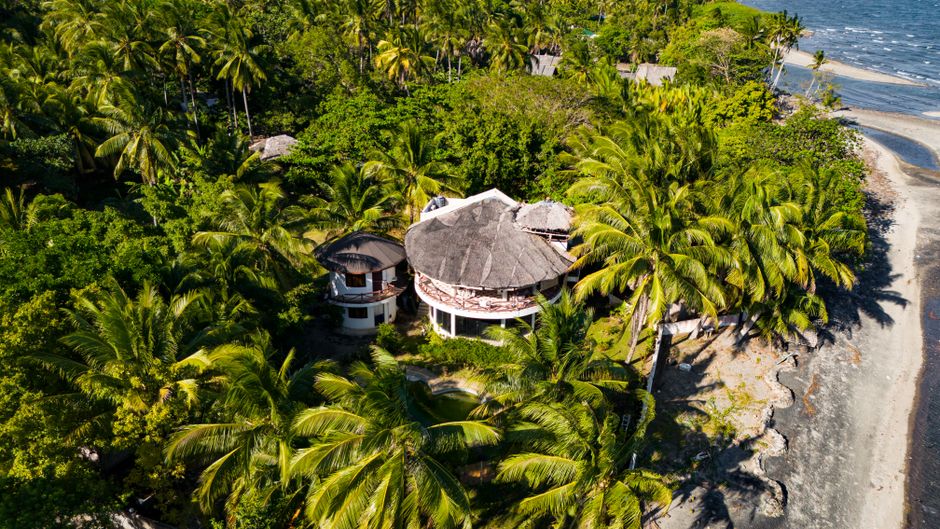
Both sit on the Osa Peninsula, the most biodiverse place in Central America. Both offer guided night walks, canopy platforms, and direct access to Corcovado National Park. But they target different budgets.
Lapa Rios has the 5-leaf CST and a private 1,000-acre reserve. Rates start at $550. You get a private plunge pool in every bungalow, a full spa, and a naturalist guide assigned to your room. The food is excellent — think grilled snapper with local coconut rice. But at $900 for a high-season night, it’s a splurge.
El Remanso holds a 4-leaf CST and charges $320–$550. No plunge pools. No assigned guides. But you get the same primary forest, the same wildlife (howler monkeys, toucans, poison dart frogs), and a 3-mile network of trails that empty onto a deserted beach. The rooms are simpler — open-air design, mosquito nets, cold showers in some cabins.
My pick: If you have $600+ to spend per night, Lapa Rios is worth it for the food and guided experiences alone. If you’re on a tighter budget, El Remanso delivers 85% of the experience for 60% of the price. The cold showers are a tradeoff, but you’re in the rainforest — you’ll want them.
Common Mistakes When Booking Eco-Hotels in Costa Rica
Mistake 1: Booking a “rainforest” hotel in the dry season without checking access roads. Many eco-lodges require 4×4 vehicles or river crossings. In dry season (December–April), some rivers become impassable for standard sedans. Always ask the hotel about the last 5 miles of road. If they say “rough,” rent a Suzuki Jimny or a Toyota Hilux.
Mistake 2: Assuming all-inclusive means all drinks. At Pacuare Lodge, the all-inclusive covers meals and non-alcoholic drinks. Wine and cocktails are extra — expect $8–$12 per glass. At Nayara Tented Camp, the $600 rate doesn’t include dinner. That’s another $100 per person. Read the inclusions carefully.
Mistake 3: Forgetting that eco means limited electricity. At Selva Bananito Lodge, lights shut off at 10 PM unless you’re using the solar-powered reading lamp. No outlets in some cabins. Charge your camera and phone during daylight hours. Bring a portable power bank — the Anker PowerCore 20100mAh ($55 on Amazon) will keep your devices alive for three days off-grid.
Mistake 4: Not booking transfers in advance. Many eco-lodges are 2–4 hours from the nearest airport. Shared shuttles exist but run infrequently. Private transfers cost $80–$150 each way. Book through the hotel directly — they know the drivers who know the roads. Do not rely on Uber or local taxis for remote lodges.
When NOT to Book an Eco-Boutique Hotel in Costa Rica
If your priority is consistent hot water, strong AC, and a pool that’s actually swimmable (not a natural pond with leaf debris), skip the eco-boutique category. Book a mainstream resort like the Andaz Costa Rica Resort at Peninsula Papagayo or the Westin Golf Resort & Spa in Playa Conchal. These properties have CST 2-3 leaf ratings — they’re not greenwashed, but they’re not deep-eco either.
If you’re traveling with someone who complains about bugs, humidity, or dirt paths, do not book a 4- or 5-leaf eco-lodge. The whole point is immersion in the environment. That means geckos in the bathroom, ants on the deck, and mud on your shoes. It’s not dirty — it’s real. But some people hate it.
If you need reliable high-speed internet for remote work, choose Finca Rosa Blanca (Central Valley, fiber optic) or Nayara Tented Camp (Arenal, Starlink). Avoid Pacuare Lodge, Selva Bananito, and Tree House Lodge — their internet is spotty at best.
If your budget is under $150 per night, skip the boutique category entirely. Look at hostels or Airbnb in towns like Puerto Viejo or La Fortuna. At that price point, you won’t find genuine eco-certification — you’ll find a hostel with a compost bin and a sign about saving turtles. That’s fine, but it’s not the same experience.
Final Verdict: Which One Should You Book?
For first-time visitors who want the full Costa Rica experience (rainforest, wildlife, adventure, and comfort), book Pacuare Lodge. The all-inclusive model removes decision fatigue, the rafting access is unforgettable, and the 5-leaf CST is verified. Budget $500 per night and you’ll leave satisfied.
For budget-conscious travelers who still want a genuine eco-experience, book El Remanso Lodge. At $320 per night, you get 4-leaf sustainability, direct access to Corcovado, and a beach you’ll often have to yourself. Accept the cold showers and limited electricity, and you’ll save $200+ per night compared to Lapa Rios.
For luxury travelers who want hot springs, fine dining, and a tented camp aesthetic, book Nayara Tented Camp. It’s the most expensive on this list, but the 4-leaf rating is legitimate, and the views of Arenal Volcano from your private plunge pool are worth the premium.
For anyone else: match your priorities against the table above. Pick the location first (Osa for wildlife, Pacuare for adventure, Central Valley for culture), then check the CST rating. If it’s below 4 leaves and they can’t explain why, keep looking.